Giving Coding Agents Something to Measure
What I changed in our RoboCup SSL control stack this summer so a coding agent could judge a change in minutes: 16x faster path planning, 11.5x smaller replays, and tools for finding stalled matches.
What I changed in our RoboCup SSL control stack this summer so a coding agent could judge a change in minutes: 16x faster path planning, 11.5x smaller replays, and tools for finding stalled matches.
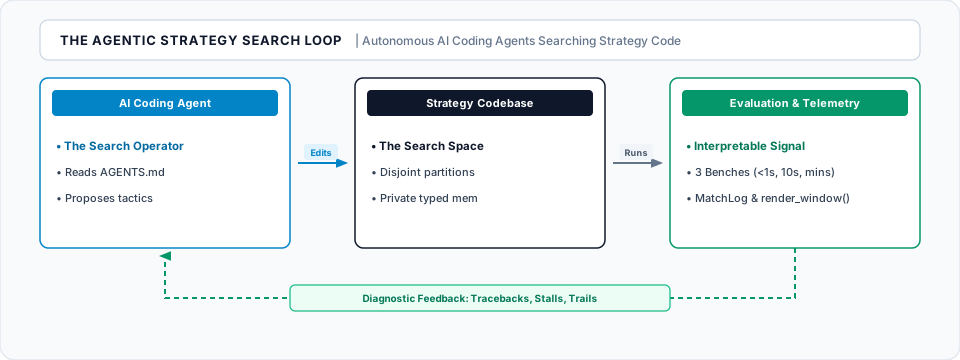
Our bet on scaling robot sports: why we believe coding agents can search strategy space better than human developers, and the infrastructure, debugging tools, and evaluation benches we built to let them hill-climb.
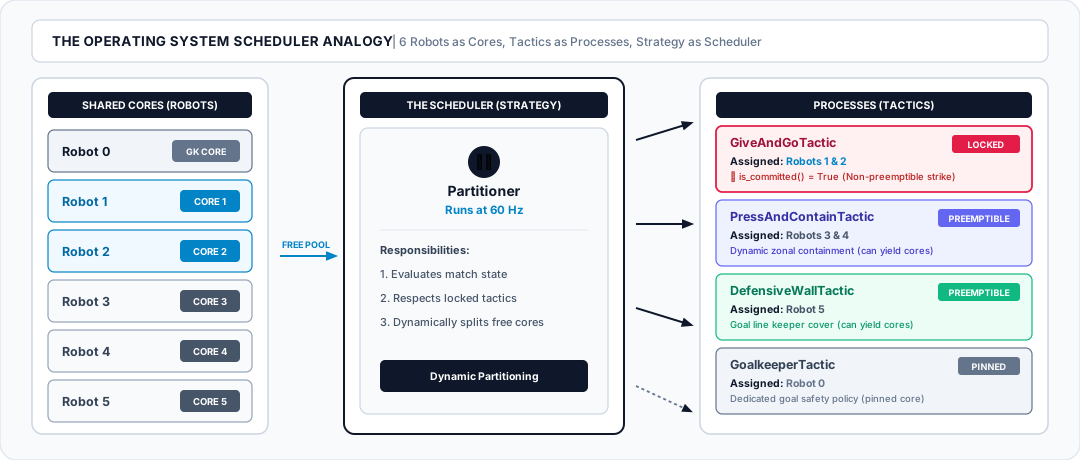
Why Behavior Trees broke down for multi-agent coordination, how modeling our scheduler after an OS kernel solved dynamic regrouping, and the three safety invariants that eliminate race conditions.
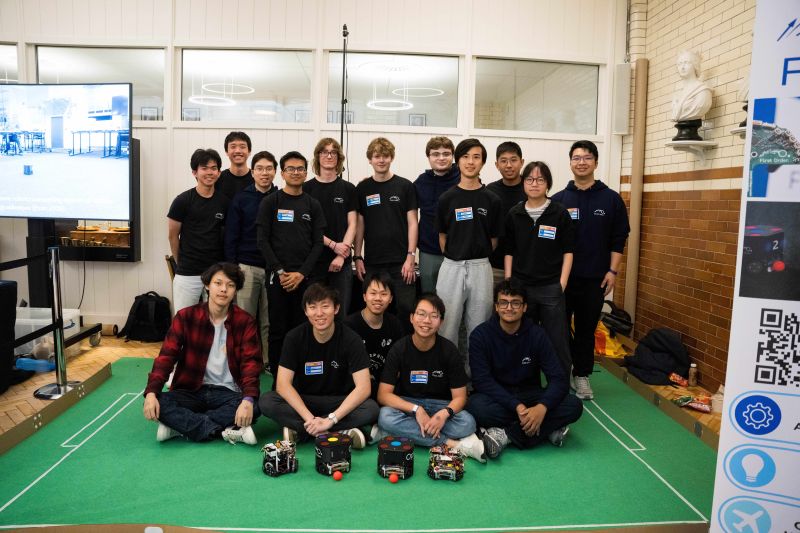
An architectural overview of our RoboCup Small Size League robot control stack, lessons from our Great Exhibition Road Festival milestone, and open challenges as we scale to a full 6v6 squad.
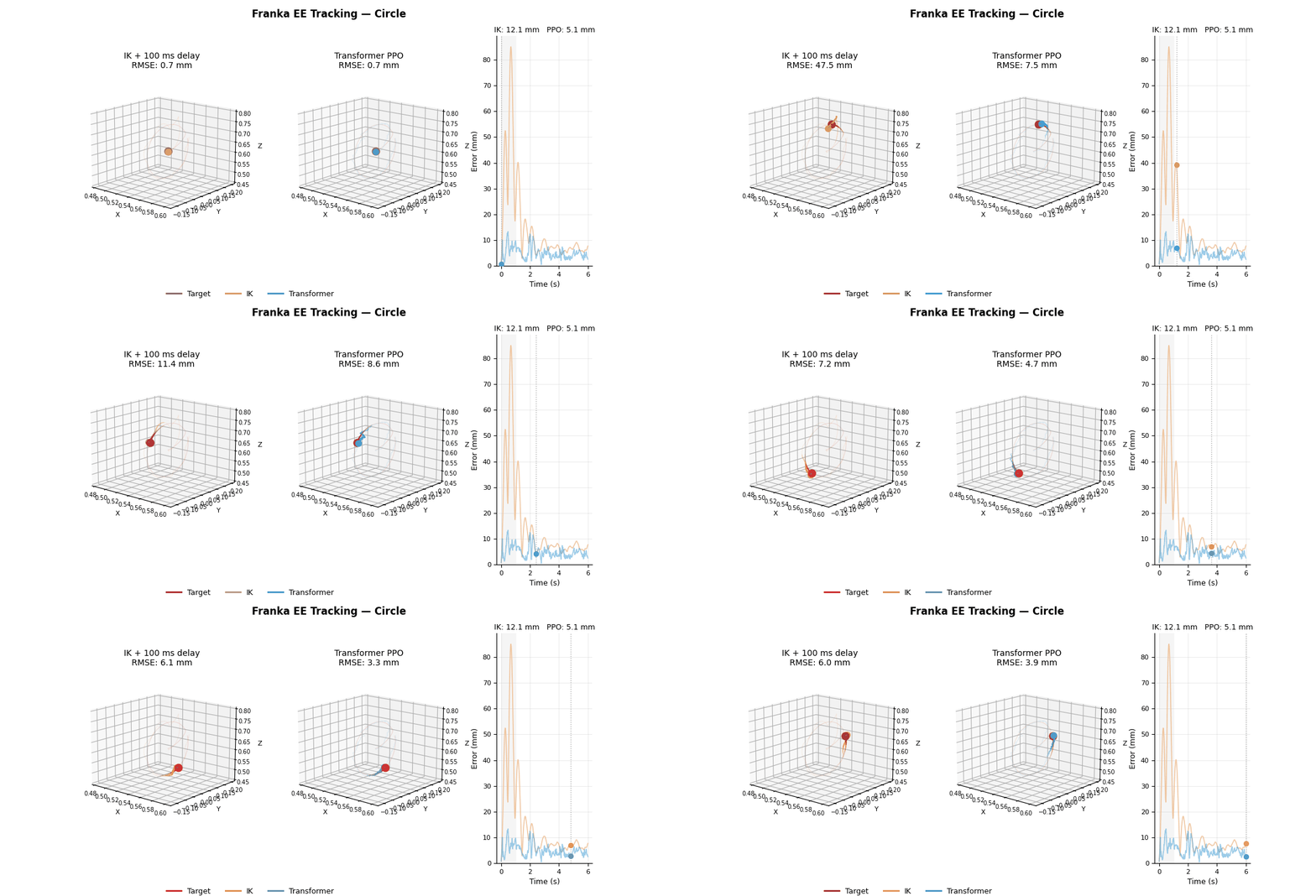
Most robot controllers have a delay. Commands take time to travel through software stacks, buffers, and hardware. For the Franka Panda arm I was working with in MuJoCo, this delay is exactly 100ms — five control steps at 50Hz. That sounds small. It is not. The problem A standard inverse kinematics (IK) controller does something simple: look at where the target is right now, compute the joint angles that would put the end-effector there, send those angles to the robot. ...